
Maurice Müller
Director Senior de Contenidos
Maurice Müller es periodista y estratega de contenidos con experiencia en medios impresos y digitales. En Formalize, traduce temas complejos de cumplimiento normativo en contenido claro y práctico para profesionales de cumplimiento, riesgo y seguridad de toda Europa.
Conclusiones clave
GRC integra la gobernanza, la gestión de riesgos y el cumplimiento en un único modelo operativo.
Sin una estructura compartida, estas tres funciones tienden a duplicar el trabajo y generar puntos ciegos.
Una plataforma GRC ayuda a los equipos a gestionar controles, evidencia y elaboración de informes en múltiples marcos normativos.
¿Qué es GRC?
GRC es una forma estructurada de que las organizaciones alineen la toma de decisiones, la conciencia del riesgo y las obligaciones regulatorias. El concepto fue desarrollado por el Open Compliance and Ethics Group, conocido como OCEG, a principios de la década de 2000 y definido formalmente en 2007, aunque el reto de fondo es anterior: a medida que las organizaciones crecen, las funciones de gobernanza, riesgo y cumplimiento tienden a desarrollarse por separado, con herramientas distintas, responsables distintos y visibilidad limitada entre equipos.
El resultado es un esfuerzo duplicado, documentación inconsistente y carencias que solo salen a la luz durante una auditoría.
GRC aborda esto tratando la gobernanza, el riesgo y el cumplimiento como un modelo operativo compartido, en lugar de departamentos aislados.
Los tres pilares de GRC
Gobernanza
La gobernanza abarca cómo una organización toma decisiones y exige responsabilidades. Esto incluye las políticas internas, la supervisión del consejo, las estructuras de aprobación y la asignación de responsabilidades entre equipos. Una buena gobernanza significa que siempre está claro quién es el responsable de una decisión y quién puede rendir cuentas cuando algo sale mal.
Riesgo
La gestión de riesgos es el proceso de identificar qué podría salir mal, evaluar su probabilidad y gravedad, y decidir qué hacer al respecto. En un contexto de GRC, el riesgo no es solo un concepto legal o financiero. Incluye los riesgos operativos, los riesgos de proveedores, los riesgos de datos y los riesgos de cumplimiento derivados de no satisfacer los requisitos regulatorios.
Cumplimiento
Cumplimiento significa satisfacer los requisitos que se aplican a tu organización: normativas, leyes, estándares del sector y políticas internas. Para la mayoría de las empresas europeas hoy en día, esto implica gestionar varios marcos normativos que se solapan a la vez, entre ellos NIS2, DORA, ISO 27001 y RGPD. El reto está en hacerlo sin reconstruir los mismos controles y evidencia desde cero para cada uno.
¿Qué significa GRC en ciberseguridad?
En un contexto de ciberseguridad, GRC aplica la misma estructura de tres partes, gobernanza, riesgo y cumplimiento, específicamente a cómo una organización protege sus sistemas, datos e infraestructura.
La gobernanza define quién es responsable de las decisiones de seguridad: quién aprueba la política de seguridad, quién autoriza las excepciones de riesgo y quién informa al consejo cuando algo sale mal. La gestión de riesgos identifica y prioriza las amenazas específicas de seguridad: vulnerabilidades, acceso de terceros, configuraciones incorrectas y el impacto operativo de una brecha de seguridad. El cumplimiento significa demostrar que los controles de seguridad satisfacen la normativa aplicable, lo que para las organizaciones europeas cada vez implica más específicamente NIS2 y DORA, junto con marcos más amplios como ISO 27001.
Lo que diferencia esto del trabajo de cumplimiento general es el ritmo. El riesgo de seguridad cambia más rápido que la mayoría de los ciclos regulatorios: una nueva vulnerabilidad o un incidente puede surgir entre revisiones programadas, no solo entre auditorías. Un enfoque de GRC diseñado para ciberseguridad debe respaldar la evaluación continua de riesgos y la recopilación de evidencia, no una instantánea periódica, para que la gobernanza y el cumplimiento vayan al ritmo de lo rápido que cambia el propio panorama de riesgo.
Para los equipos de seguridad en concreto, aquí es donde GRC deja de ser un ejercicio de cumplimiento gestionado por otra persona y pasa a formar parte de las operaciones de seguridad del día a día: la evidencia de incidentes, el estado de los controles y la preparación para auditorías conviven en el mismo sistema que los equipos de seguridad ya utilizan para gestionar el riesgo.
¿Por qué importa GRC?
El panorama del cumplimiento ha cambiado. Hace diez años, muchas organizaciones gestionaban el cumplimiento como un proyecto anual: prepararse para la auditoría, superarla y seguir adelante. Ese modelo ya no funciona.
Las normativas exigen ahora documentación continua, responsabilidades claras y evidencia lista para auditoría en cualquier momento. NIS2 y DORA, por ejemplo, exigen que las organizaciones demuestren resiliencia operativa continua, no solo una instantánea anual.
Aquí es donde un enfoque de GRC se vuelve práctico en lugar de teórico. Cuando la gobernanza, el riesgo y el cumplimiento comparten el mismo marco, los mismos controles y la misma evidencia, las organizaciones dejan de hacer el mismo trabajo tres veces y empiezan a construir algo con lo que realmente pueden contar.
Menos trabajo duplicado: los controles y la evidencia compartidos pueden respaldar varios requisitos a la vez.
Responsabilidades más claras: los riesgos, las políticas y los controles tienen responsables asignados.
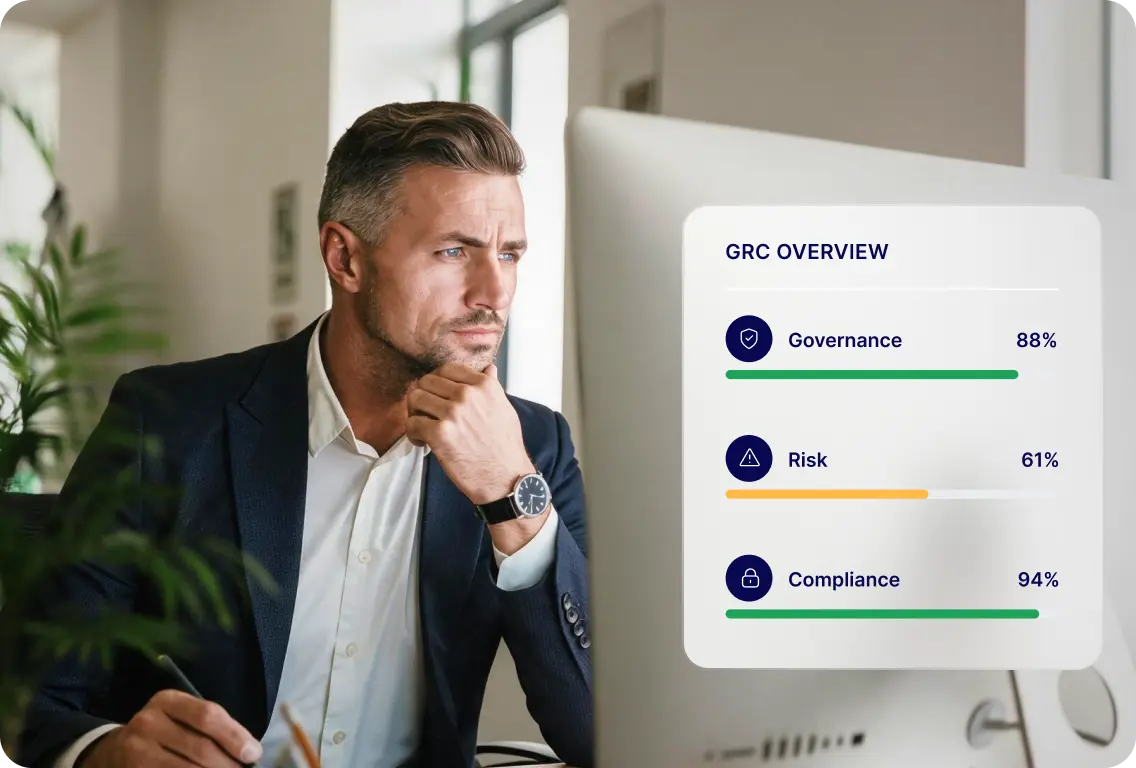
Mejor visibilidad: la dirección puede ver los riesgos abiertos, las tareas pendientes y el estado de los controles.
Auditorías más eficientes: la evidencia está conectada a los controles y requisitos correspondientes.
Cambios normativos más sencillos: los nuevos requisitos pueden mapearse a los controles y procesos existentes.
Componentes clave de un programa de GRC
Un programa de GRC funcional suele abarcar cuatro áreas:
Gestión de políticas y controles: un lugar centralizado para documentar políticas, asignar responsables y hacer seguimiento de si los controles están activos y actualizados.
Evaluación de riesgos: un proceso estructurado para identificar riesgos, puntuarlos según su probabilidad e impacto, y decidir cómo tratarlos.
Gestión de auditorías y evidencia: una forma de recopilar evidencia de manera continua, no solo antes de una auditoría, y de demostrar que esa evidencia está actualizada, aprobada y conectada al requisito correspondiente.
Informes y paneles: una vista que ofrece a la dirección una imagen clara del estado de cumplimiento, los riesgos abiertos, las tareas pendientes y las próximas obligaciones.
¿Qué es una herramienta de GRC?
Las hojas de cálculo suelen ser el punto de partida. Son flexibles, familiares y suficientes cuando un solo equipo gestiona un único marco normativo con un número limitado de controles. Empiezan a fallar cuando el cumplimiento se vuelve continuo.
El problema no es lo que una hoja de cálculo puede rastrear. Es lo que no puede gestionar de forma fiable: la asignación de responsables, el historial de versiones, el rastro de evidencia, el mapeo entre marcos normativos y los informes listos para auditoría. Cuando un equipo se está preparando para una evaluación DORA y la evidencia relevante está repartida entre carpetas compartidas, hilos de correo y bandejas de entrada individuales, el verdadero trabajo se convierte en demostrar que todo está actualizado, asignado y conectado al requisito correspondiente.
Una plataforma de GRC resuelve esto dando a los equipos un único lugar para gestionar controles, evidencia, riesgo e informes en múltiples marcos normativos. Al evaluar una solución de GRC, los equipos deben buscar automatización de flujos de trabajo, mapeo de controles entre marcos normativos, recopilación continua de evidencia e informes listos para auditoría.
Señales de que una organización está lista para pasar de las hojas de cálculo a una herramienta de GRC:
El mismo control o política aparece en varios marcos normativos, pero se mantiene por separado en cada uno.
La preparación de auditorías lleva semanas porque la evidencia está dispersa entre herramientas y bandejas de entrada.
La dirección no tiene una visión fiable del estado de cumplimiento entre auditorías.
La propiedad de los controles no está clara, con tareas rastreadas por personas concretas en lugar de asignadas en un sistema.
GRC frente a ERM: ¿cuál es la diferencia?
La gestión de riesgos empresariales, conocida como ERM, se centra específicamente en identificar y gestionar el riesgo en toda la organización. GRC es más amplio: incluye el riesgo, pero también abarca las estructuras de gobernanza y las obligaciones de cumplimiento.
En la práctica, la mayoría de las organizaciones necesitan ambos enfoques. ERM aporta la metodología de riesgo; GRC aporta el marco operativo que conecta la gestión de riesgos con las decisiones de gobernanza y los requisitos de cumplimiento. Muchas plataformas de GRC incluyen capacidades de gestión de riesgos como parte de una infraestructura de cumplimiento más amplia.
GRC en la práctica: un ejemplo
Así es como se aplica GRC a un escenario habitual de cumplimiento: la gestión del acceso de usuarios en toda una organización.
Área | Ejemplo |
|---|---|
Gobernanza | La dirección define quién puede aprobar el acceso y con qué frecuencia deben realizarse las revisiones |
Riesgo | La organización evalúa el riesgo de permisos excesivos u obsoletos |
Cumplimiento | Las revisiones y aprobaciones de acceso aportan evidencia para los requisitos de seguridad correspondientes |
Controles | El acceso de usuarios se revisa trimestralmente y se elimina cuando ya no es necesario |
Evidencia | Los registros de revisión, las aprobaciones y los registros de subsanación se almacenan de forma centralizada |
Informes | Las revisiones pendientes y los problemas de acceso sin resolver son visibles para los responsables de los controles y la dirección |
Cómo empezar con GRC
La mayoría de las organizaciones no necesitan rediseñar todo su programa de cumplimiento para empezar a ver resultados. El enfoque más práctico es empezar por un área de alta prioridad, como la preparación para NIS2, los informes de DORA o la recopilación de evidencia para ISO 27001, y construir a partir de ahí.
El primer paso suele ser mapear lo que ya existe: qué políticas están vigentes, qué controles están activos, quién es su responsable y qué marcos normativos deben respaldar. A partir de ahí, las carencias se vuelven visibles, se pueden asignar responsables y puede comenzar la recopilación de evidencia.
Una biblioteca de marcos de cumplimiento puede ayudar a los equipos a conectar los controles existentes con múltiples requisitos regulatorios sin construir todo desde cero.