
Maurice Müller
Senior Content Manager
Maurice Müller is a journalist and content strategist with experience across print and digital media. At Formalize, he translates complex compliance and regulatory topics into clear, practical content for compliance, risk, and security professionals across Europe.
Key takeaways:
Supplier risk management helps organizations identify, assess, and continuously monitor risks associated with their suppliers and other external providers.
Not all suppliers carry the same level of risk, so assessments and oversight should reflect their criticality.
Effective supplier risk management covers financial, operational, cybersecurity, compliance, supply chain, and reputational risks.
A structured process connects supplier risks to ownership, controls, evidence, remediation, and broader GRC activities.
Supplier risk management software can help teams replace fragmented spreadsheets and manual processes with a continuous, structured approach.
Most organizations already have some process for vetting suppliers, at least at onboarding. The challenge is keeping that picture accurate afterward. Effective supplier risk management isn’t a one-time assessment completed during onboarding. It’s an ongoing process that connects supplier due diligence, risk management, controls, and monitoring to ensure the organization’s view of supplier risk stays current, rather than frozen at what it looked like at signup.
What is supplier risk management?
Supplier risk management is a structured approach to identifying and managing the risks that suppliers and other external providers can introduce to an organization.
These risks can affect different parts of the business. A supplier could become financially unstable, fail to deliver a critical service, suffer a cybersecurity incident, or fail to meet a regulatory requirement. The impact can range from a minor operational delay to a serious disruption affecting customers, data, or business continuity.
Supplier risk management gives organizations a way to assess these risks consistently and decide how much oversight each supplier requires.
It typically covers:
Financial risk: whether a supplier is financially stable enough to continue providing its services
Operational risk: whether failures, delays, or capacity issues could disrupt business operations
Cybersecurity and data risk: whether a supplier could expose systems or sensitive information to security threats
Compliance risk: whether a supplier's practices could contribute to regulatory or contractual non-compliance
Reputational risk: whether a supplier's actions could damage the organization's reputation
Supply chain risk: whether dependencies further upstream could affect the supplier and, in turn, your organization
Supplier risk management is closely related to third-party risk management. The main difference is scope: supplier risk management focuses specifically on suppliers, while third-party risk management can cover a broader range of external parties, including vendors, contractors, partners, and service providers.
What types of supplier risk should you manage?
Not every supplier creates the same level or type of risk. A supplier providing office equipment, for example, presents a different risk profile from a cloud provider that stores customer data.
A useful supplier risk management program therefore considers several risk categories.
Financial risk
A supplier's financial health can affect its ability to continue delivering products or services.
Financial risk can arise from insolvency, declining revenue, excessive debt, or other signs of financial instability. For critical suppliers, a failure can leave your organization searching for an alternative under time pressure.
Operational and supply chain risk
Suppliers can become a source of operational disruption through delivery failures, capacity constraints, quality issues, or dependency on other suppliers.
This becomes particularly important when a supplier provides a service that cannot easily be replaced. A single supplier dependency can become a single point of failure if there is no viable alternative.
Cybersecurity and data risk
Third parties often have access to organizational systems, networks, or data. That means a supplier's security practices can directly affect your own security posture.
NIS2 explicitly includes supply chain security among the cybersecurity risk-management measures for essential and important entities. It also requires organizations to consider supplier vulnerabilities and the overall quality and cybersecurity practices of their suppliers and service providers.
You may also be interested in: What is NIS2? The EU cybersecurity directive, and what it means for your organization
Compliance and regulatory risk
Your organization can remain responsible for meeting its regulatory obligations even when part of a process is handled by a supplier.
Regulatory requirements increasingly extend beyond an organization's own systems to the security practices of its suppliers and service providers.
Reputational and ESG risk
A supplier's conduct can also affect your organization's reputation. Issues such as unethical business practices, poor working conditions, environmental incidents, or regulatory violations can create reputational exposure even when the incident occurs outside your organization.
The level of attention this requires will depend on your industry, regulatory environment, and risk profile.
How does supplier risk management work?
Supplier risk management works best as a continuous lifecycle rather than a single questionnaire or annual review.
A typical lifecycle looks like this:
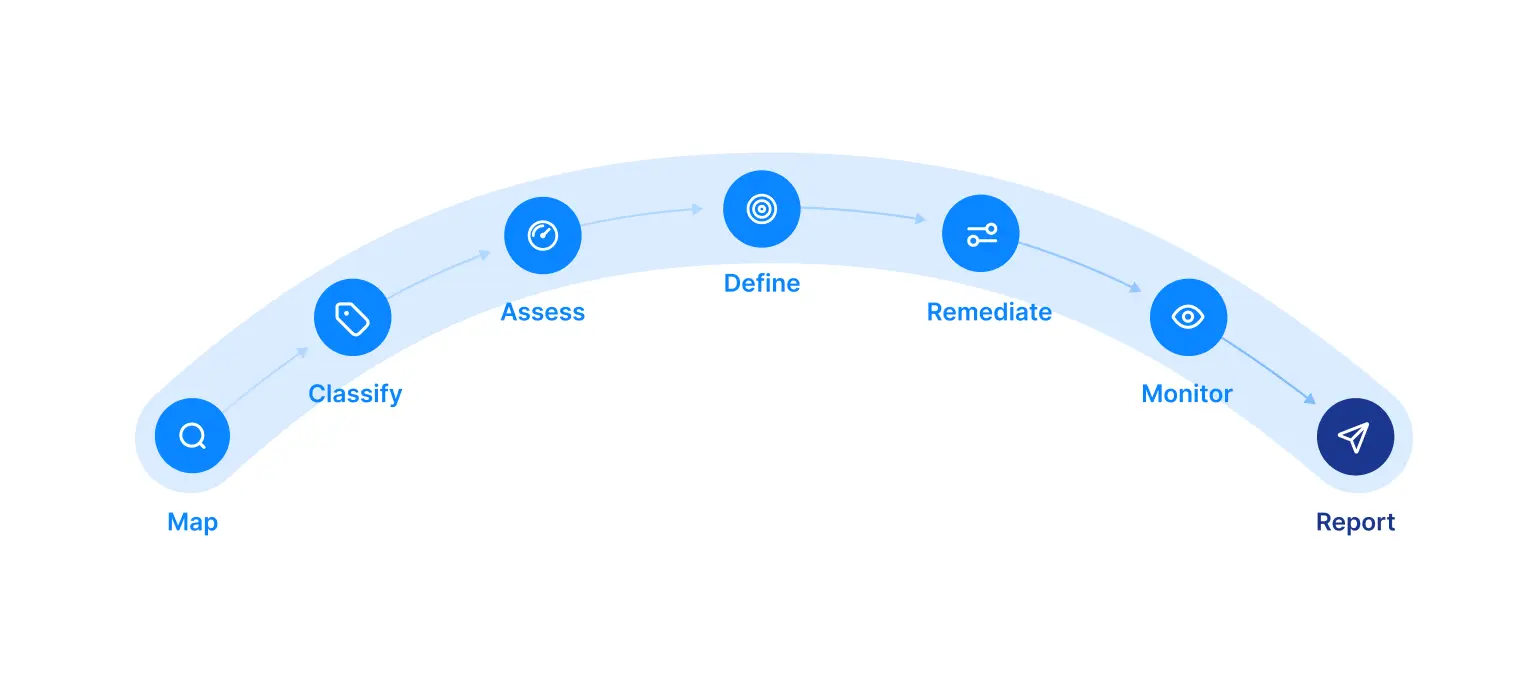 The first step is understanding which suppliers you rely on and what they provide. From there, you can assess the risks associated with each supplier, determine which ones require the most attention, and put appropriate controls in place.
The process should be proportionate to the risk.
A supplier supporting a critical business function may require detailed due diligence, contractual security requirements, evidence of controls, and regular reassessment. A low-risk supplier may only need a basic assessment and periodic review.
This risk-based approach prevents teams from spending the same amount of time on every supplier.
It also changes the focus from:
Have we assessed this supplier?
to:
Do we understand the current risk this supplier creates?
That distinction matters because supplier risk can change. A supplier can acquire another company, change its technology, introduce a new subcontractor, experience a security incident, or become more critical to your organization over time.
Why is supplier risk management important?
Organizations increasingly depend on external providers for critical parts of their operations. That makes supplier risk part of the organization's broader risk profile.
Effective supplier risk management helps organizations:
Protect business continuity: identify suppliers whose failure could disrupt critical operations
Reduce cybersecurity exposure: understand how third-party access, systems, and data processing affect security
Meet regulatory requirements: demonstrate that relevant supplier and third-party risks are being identified and managed
Prioritize resources: focus deeper due diligence and monitoring on critical suppliers
Improve accountability: assign clear ownership for supplier risks and remediation
Respond to changes: identify new risks when suppliers, services, or dependencies change
Regulatory requirements are also making third-party oversight more explicit, particularly in sectors where organizations depend on external providers for critical services.
DORA takes a similarly structured approach to ICT third-party risk in financial services. Financial entities must maintain oversight of their ICT third-party arrangements, apply a proportionate approach based on the criticality of their dependencies, and remain responsible for their regulatory obligations even when services are provided by third parties.
Supplier risk management is therefore no longer just a procurement concern. It is part of operational resilience, cybersecurity, compliance, and enterprise risk management.
How to build an effective supplier risk management process
A practical supplier risk management process does not need to start with hundreds of questionnaires or a complex scoring model. The first priority is creating a clear view of your supplier base and then applying a proportionate approach.
1. Map your suppliers
Start by creating a central inventory of suppliers and the services they provide.
For each supplier, capture information such as:
What service or product does the supplier provide?
Which business function depends on it?
What data or systems can the supplier access?
Is the service critical to business operations?
Are there subcontractors or other dependencies?
Who owns the relationship internally?
Without this information, it is difficult to assess supplier risk consistently.
2. Classify suppliers by criticality
Not every supplier needs the same level of assessment. Classify suppliers according to factors such as the importance of the service, access to sensitive data, operational dependency, and the potential impact of supplier failure.
This creates a tiered approach. Critical suppliers may require extensive due diligence and ongoing monitoring, while lower-risk suppliers can follow a lighter process. The principle is simple: the greater the potential impact, the greater the level of oversight.
3. Assess and score supplier risk
Once suppliers are classified, assess the risks they introduce. Depending on the supplier and your risk framework, this could include financial stability, cybersecurity controls, regulatory compliance, business continuity, data protection, geographic exposure, and subcontractor dependencies.
A supplier risk score can help compare suppliers consistently and highlight those that require further action. The score itself is less important than what it leads to. A useful assessment should help you decide whether to accept, mitigate, transfer, or avoid a particular risk.
4. Define risk tolerance and ownership
For each material risk, establish who is responsible for monitoring it, who can accept the risk, and when it needs to be escalated.
You should also define thresholds for action. For example, a supplier that falls below a required security standard may need a remediation plan, additional contractual controls, or a replacement strategy. This turns supplier assessment into risk management rather than documentation.
5. Put controls and remediation in place
Where an assessment identifies unacceptable risk, decide what needs to change.
Depending on the situation, this could mean:
Adding cybersecurity or data protection requirements to the contract
Requiring specific certifications or independent assessments
Introducing additional access controls
Creating a business continuity or exit plan
Requiring the supplier to address identified vulnerabilities
Setting deadlines for remediation
Finding an alternative supplier
These requirements can also have contractual implications. The EU's implementing rules for certain entities include provisions covering cybersecurity requirements, incident notification, audit rights, vulnerability handling, subcontracting, and obligations when a contract ends.
6. Monitor suppliers continuously
Supplier risk does not stop changing after onboarding. Monitor critical suppliers for changes that could affect their risk profile. Depending on the risk, this might include security incidents, changes in ownership, financial problems, new subcontractors, expired certifications, or changes to the services they provide.
The frequency of reassessment should reflect the supplier's criticality and risk. Critical suppliers may require continuous monitoring, while lower-risk suppliers can be reviewed less frequently.
7. Report and escalate supplier risk
Finally, supplier risk needs to be visible to the people responsible for managing it. Leadership should be able to see which suppliers are critical, where significant risks exist, which remediation actions are overdue, and where the organization has accepted residual risk.
Connecting supplier risk to the broader risk and compliance framework makes this easier. Supplier risks can then be linked to relevant controls, policies, assets, regulatory requirements, and business processes rather than managed as a separate spreadsheet.
Supplier risk management software and solutions
Spreadsheets can be useful when the supplier base is small and the assessment process is simple. They become harder to manage as the number of suppliers, frameworks, controls, and evidence requirements grows.
The problem is not simply keeping a list of suppliers. It is maintaining a reliable view of:
Supplier ownership
Risk classifications and scores
Assessment results
Supporting evidence
Controls and requirements
Remediation tasks
Review dates
Changes in supplier risk
Reporting and escalation
A supplier risk management solution can bring these activities into one structured workflow.
When evaluating supplier risk management software, look for capabilities that support the entire lifecycle rather than just supplier onboarding. Useful features can include supplier inventories, risk scoring, assessment workflows, evidence collection, control mapping, remediation tracking, ongoing monitoring, and reporting.
For organizations managing several regulatory frameworks, connecting supplier risk to the broader GRC environment is particularly useful.
Formalize brings supplier and third-party management into the same environment as risks and controls, helping teams manage external dependencies alongside their broader compliance and risk processes.
Supplier risk management vs. third-party risk management
Supplier risk management and third-party risk management are closely related, and the terms are often used interchangeably. The main difference is scope.
Supplier risk management focuses on risks arising from suppliers and vendors that provide products or services to an organization.
Third-party risk management (TPRM) is broader. It can include suppliers, but may also cover contractors, consultants, business partners, outsourced service providers, and other external parties.
In practice, the two approaches use many of the same processes: identifying third parties, assessing risk, collecting evidence, assigning ownership, monitoring changes, and managing remediation.
For organizations with a large external ecosystem, third-party risk management provides the broader framework, while supplier risk management can be one part of that program.
How to get started with supplier risk management
You do not need to assess every supplier in detail before you can start managing supplier risk.
A practical starting point is to map your supplier base and identify the suppliers your organization depends on most. From there, classify suppliers by criticality, assess the main risks they introduce, and assign ownership for those risks.
The next step is to connect supplier risk to the controls and processes you already have.
If your organization already manages NIS2, DORA, ISO 27001, or other compliance frameworks, supplier risk should not sit separately from that work. Connecting suppliers to relevant controls and requirements can reduce duplicated effort and make it easier to demonstrate how risks are being managed.
See your suppliers connected to real risk
Bring your current supplier list, spreadsheet included. We'd rather show you how it connects to your controls than describe it.